Fireplace Design: A Few Directions Worth Considering
A fireplace carries more design weight than its size suggests — it is often the one fixed point a living room is arranged around. The surround, the mantel, and the hearth each offer a chance to set the room's tone, whether that means restraint or a genuine statement piece.

Let the surround do the work
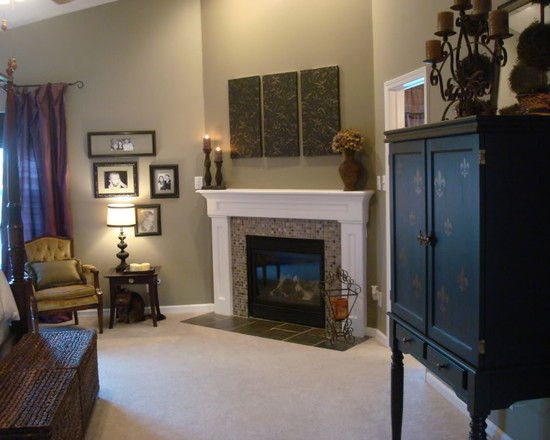
A simple, unadorned fireplace is a good candidate for a one-inch glass mosaic surround, which can carry most of a room's visual interest on its own. Keep the mantel plain and let the mosaic's palette echo the curtains, rugs, or upholstery nearby — restraint elsewhere makes the surround read as a deliberate feature rather than decoration for its own sake.

Beyond the traditional hearth
A hybrid fireplace — a timber-clad base paired with a glass enclosure — brings a quieter, more contemporary elegance than a conventional masonry surround. For something more sculptural, a suspended fireplace works well in front of floor-to-ceiling glazing, where its form reads clearly against the view behind it, or as a hanging piece above a sofa in an otherwise minimal, glass-walled room.
A wire-framed, open fireplace is worth considering too, especially in a more contemporary interior — its lightness lets it sit comfortably against almost any surrounding fixture or theme, which is harder to achieve with a heavier, enclosed design. Whatever direction fits the room, the common thread across all of these is restraint elsewhere: a fireplace this considered doesn't need much competing for attention around it.


Comments